
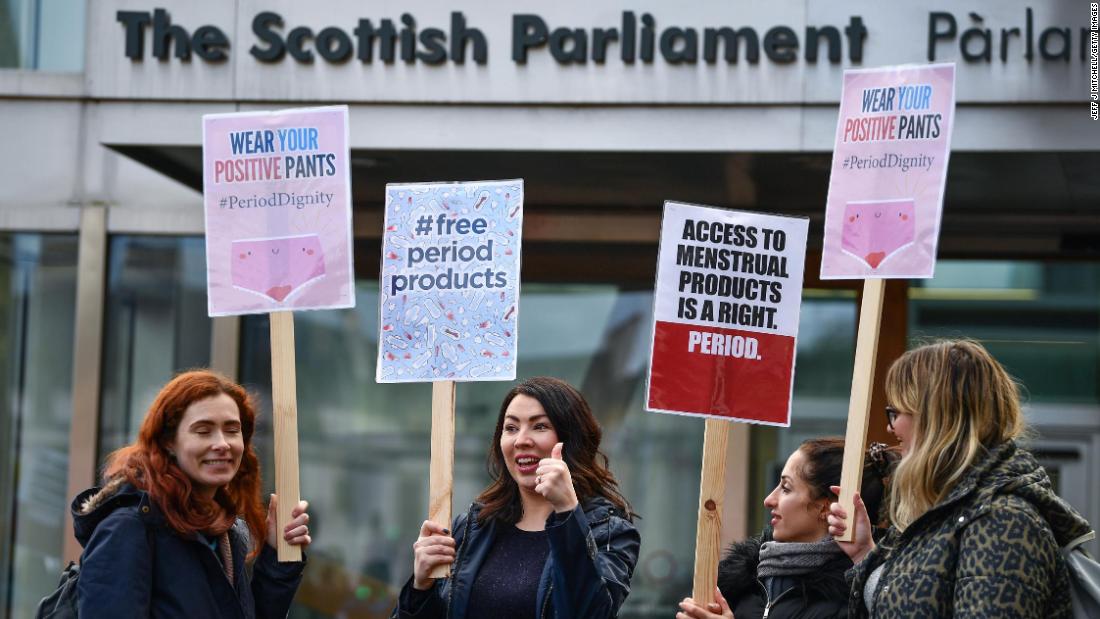
Scotland, a British state with the capital Edinburgh, has become the first country in the world to provide free and universal access to menstrual products, after a four-year campaign that fundamentally changed public discourse around menstruation, Wednesday (25/11/2020).
The Period Products (Free Provision) (Scotland) Act, which passed unanimously through its final tranche on Tuesday night (24/11), will place a legal obligation on local authorities to provide menstrual products to everyone who needs them. To set an early example, people’s councils, such as North Ayrshire, have been providing free tampons and sanitary napkins in public buildings since 2018.
The campaign has been backed by various national grassroots groups spearheaded by Scottish Labor health spokeswoman Monica Lennon, who told the media the decision was a proud day for Scotland.
“This will make a huge difference to the lives of women and girls and everyone who is menstruating. There has been great progress at the community level and through local authorities in giving everyone the opportunity to achieve dignified equality,” Lennon said.
“There has been a major change in the way menstruation is discussed in the public’s life. A few years ago there was never an open discussion about menstruation in the Holyrood room and now it has become mainstream. MSPs enjoy being a part of that, and that includes menopause, endometriosis, as well as the types of products we use and their sustainability,” he added.
According to previous research by the grassroots group Women for Independent, people there are having difficulty getting basic sanitation products for basic needs every month, with numbers increasing during the coronavirus pandemic.
The data revealed that almost one in five women had experienced difficulties accessing menstrual products, which had a significant impact on their hygiene and health, as well as their well-being. The female population is estimated to spend an average of hundreds of thousands in a month, to buy menstrual products which if calculated for a lifetime can cost tens of millions of rupiah.
The scheme, which is estimated to cost around £8.7 million per year, will not be tested, meaning any woman can apply for free access to menstrual products. The Scottish government initially opposed the universal provision, but switched to joining cross-party support at the bill’s first phase debate in February. The SNP has faced growing pressure from its own activists, as well as from the coalition of trade unions and civil society groups that Lennon co-founded.
The law will also set out in legislation a requirement for schools, colleges and universities to provide menstrual products free of charge, which the first minister, Nicola Sturgeon, announced in 2017. This is a world first, while the Scottish government also funded a project in Aberdeen to deliver free menstrual products to low-income households as well as a further £4 million for the council to continue rolling out to other public places.
In the meantime, a number of individual businesses, such as restaurants, pubs, and even football clubs, have started to independently provide free menstrual products. It is becoming increasingly common in Scotland, to enter the women’s restroom and find free menstrual products near the sink, or with an honesty box.
Lennon said campaigners around the world were watching progress in Scotland very closely. “This is an important message in the midst of a global pandemic that we can still put the rights of women and girls at the top of the political agenda.”